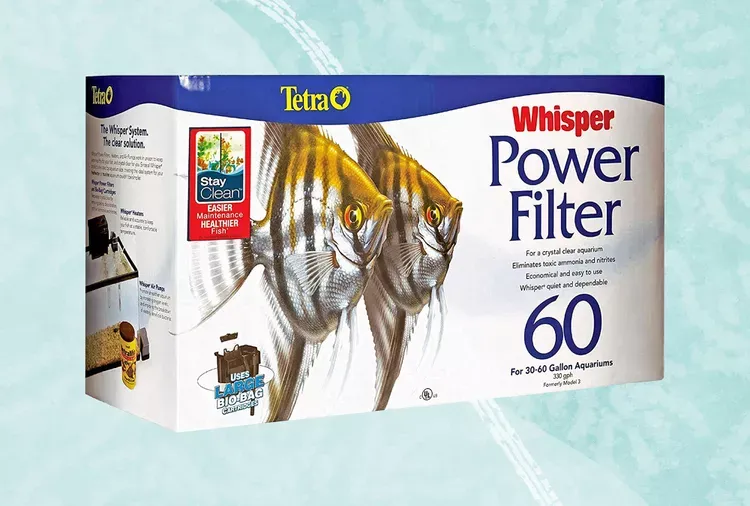
Your filter is the single most important piece of gear in the tank. Not the light, not the fancy background, the filter. It’s where your beneficial bacteria live and it’s the thing standing between your fish and a tank full of ammonia. Get it right and most of fishkeeping takes care of itself.
The tricky part is that “power filter” covers a few very different things, and a lot of guides (including the older version of this one) muddle them together. So here’s the honest version: what the categories actually are, how to size one without getting burned by the number on the box, the real 2026 lineup worth looking at, and the maintenance mistakes that quietly kill people’s tanks. This is written for someone setting up a freshwater community tank or upgrading a filter that can’t keep up, though most of it applies to saltwater too.
Quick heads up on the links: the Amazon links here are affiliate links, so if you buy through one I earn a small commission at no extra cost to you. I’m pointing you at product searches rather than one locked-in listing on purpose, because sizes and model numbers change and you’ll want to match the filter to your specific tank.
My picks in one line
If you don’t want to read the whole thing, start here:
- Best all-round hang-on-back: Seachem Tidal. Big refillable media basket, adjustable flow, built-in surface skimmer. It’s the one I’d buy first.
- The reliable workhorse: AquaClear. A 40-plus-year-old design that just works, with a huge open media basket and sizes for 5 to 110 gallons.
- Best for big or messy tanks: a Fluval FX-series canister. Overkill for a 30 gallon, perfect for a heavily stocked 75 plus.
- Best for nano, shrimp, or a betta: a plain sponge filter on an air pump. It’s cheap, the flow is gentle enough for fry and shrimp, and the whole sponge doubles as bacteria surface area.
- Good budget HOB: Aqueon QuietFlow. Quiet and cheap, and it holds up fine on a small community tank. Just ignore the cartridge marketing (more on that below).
What “power filter” actually means
People use “power filter” to mean a few different things, so let’s clear it up. A power filter is any filter with a motor-driven pump pushing water through media, as opposed to something passive. In practice you’re choosing between three families.
Hang-on-back (HOB). Hangs on the back rim, sucks water up an intake tube, runs it through media, spills it back in. Easy all-rounder. Installs in minutes, cheap to buy and run, and you can see and reach the media without taking anything apart. Downsides: limited media space, and the spill-back can be noisy if your water level drops. Flow usually runs from about 50 up to 400 GPH depending on size. For most people with a tank under 75 gallons, this is the answer.
Canister. Sits in the cabinet under the tank, sealed, with hoses running up to the tank. Holds far more media than any HOB, which means better biological capacity and the cleanest, clearest “polished” water. Flow ranges from around 200 to 700 plus GPH. The catch is cost and cleaning: they’re pricier, and cleaning one is a proper 30-minute job with hoses and a bucket, not a two-minute swish. Worth it once you’re heavily stocked or past 75 gallons.
Sponge / air-driven. Not glamorous, just a sponge on a tube driven by an air pump. But it’s cheap and about as gentle as flow gets, and because the entire sponge is bacteria surface area it punches well above its price on biological filtration. There’s no chemical filtration and it does nothing for fine polishing, but for nano tanks, shrimp, breeding setups, and quarantine or hospital tanks it’s often the correct choice, not the budget compromise.
How to choose the best power filter for your aquarium
Match the filter to the tank, in this order: tank size, then how messy your fish are, then any special needs (a betta’s fins, an axolotl’s dislike of current). Here’s my rough map:
- Nano, shrimp, breeding, quarantine: sponge filter. Gentle, safe, cheap, and it won’t suck up shrimplets or fry.
- Community tank up to about 55 gallons: a single quality HOB with a refillable media basket. This covers the majority of home aquariums.
- Mid-size, roughly 55 to 75 gallons: a bigger HOB, or two HOBs, or a smaller canister if you’re stocked heavy.
- Large or heavily stocked, 75 gallons and up: canister, full stop. Or a sump if you’re going really big (that’s a whole other guide).
Under about 75 gallons, a good HOB usually beats a canister on practicality and cost. Don’t let anyone talk you into a canister for a lightly stocked 40 gallon. You’ll just spend more and clean more.
Sizing by GPH, and the box-number trap
The turnover rule: aim for 4 to 6 times your tank volume per hour for a normal community tank. Bump that to 8 to 10 times for goldfish, cichlids, or anything you’ve stocked heavily, because those fish are waste factories. Canisters can run a bit lower (3 to 5x) than HOBs (5 to 10x) for the same result, because they hold so much more media that the water doesn’t need to pass through as often.
So a 40 gallon community tank wants somewhere around 160 to 240 GPH. Simple enough.
Here’s the part almost nobody tells beginners, and it’s the reason so many tanks are undersized: the GPH printed on the box is the empty flow rate. They measure it with nothing in the filter. The second you load it with sponge, biomedia, and carbon, real flow drops by roughly 25 to 40 percent. It drops further as the media clogs between cleanings. A filter “rated for 40 gallons” is often really pushing more like 25 to 30 gallons of turnover once it’s set up and dirty.
So don’t buy a filter rated exactly at your tank size. Size up. A filter rated for a 55 on a 40 gallon tank isn’t overkill, it’s about right once reality kicks in. Slightly too much flow you can always dial down or baffle. Too little and you’re fighting the tank forever.
The three jobs a filter does
Any decent power filter handles three types of filtration, and understanding them changes how you maintain the thing.
Mechanical is the sponge or floss catching visible gunk: fish waste, uneaten food, plant bits. This is the layer you rinse most often.
Chemical is usually activated carbon. It pulls dissolved toxins, tannins that yellow the water, and odors. Carbon is optional day to day and gets exhausted after a few weeks, so a lot of experienced keepers only run it to clear up medication or discoloration and skip it otherwise.
Biological is the whole ballgame. Beneficial bacteria colonize your media and convert ammonia into nitrite and then into far less toxic nitrate. This colony is what actually keeps your fish alive, and it lives on the porous biomedia and inside the sponge. If you want the full picture of how this works, read up on the nitrogen cycle and the bacteria in your filter media, because it’s the concept everything else hangs off.
This is why refillable media baskets matter. Filters like the Seachem Tidal and AquaClear let you keep and reuse your biomedia instead of throwing it out. Cartridge-based filters practically beg you to bin the whole thing every month, and when you do, you’re binning your bacteria colony with it. Which brings us to the mistakes.
The 2026 landscape: what’s actually worth buying
None of these are direct product links, because I’d rather you land on a current listing in the right size than a fixed one that might be out of stock or the wrong model for your tank. Search, check the size chart, buy the one that fits.
Seachem Tidal (my pick for best HOB)
The Tidal is the one that keeps winning head-to-head HOB comparisons, and I agree with the crowd here. The big draw is a large open media basket you fill yourself, so you control the media and keep your bacteria between cleanings. It has adjustable flow that works across the whole range and a built-in surface skimmer that pulls the oily film off the top of the water and improves gas exchange. It’s a little chunky on the back of the tank and not the cheapest HOB, but it’s the one I’d buy first.
Key features: refillable media basket, adjustable flow, surface skimmer, self-priming, sizes for roughly 20 to 110 gallon tanks.
Check the Seachem Tidal on Amazon
AquaClear (the workhorse)
The AquaClear has been around for decades for a reason. It’s a simple, tough HOB with a big open media chamber you can stuff with whatever you like, and it comes in sizes from tiny 5 gallon setups up to 110 gallons. There are no cartridges to buy and nothing clever going on, which is exactly why it keeps running year after year. Flow isn’t adjustable on the older models the way the Tidal’s is, and priming takes a manual fill, but for pure reliability per dollar it’s hard to beat. If the Tidal is the smart pick, this is the safe pick.
Key features: large refillable media basket, wide size range, very durable, easy media customization.
Check AquaClear filters on Amazon
Fluval C-series (five-stage HOB)
If you want more filtration stages in a hang-on-back, the C-series (the C4 is the common one) runs a five-stage setup including a clever trickle chamber that gives you some wet/dry biological filtration on top of the usual mechanical and chemical layers. More capable than a basic HOB, a bit more to clean. Good middle ground for someone who wants HOB convenience but a bit more muscle.
Key features: 5-stage filtration, wet/dry bio section, refillable media, sizes for roughly 20 to 70 gallons.
Check the Fluval C-series on Amazon
Marineland Penguin BIO-Wheel
The Penguin’s gimmick is the BIO-Wheel, a paper wheel that spins in the outflow so bacteria on it get constant exposure to both water and air, which boosts biological filtration. It works, and plenty of people swear by them. My gripe is that Marineland leans hard on the cartridge model, so you have to consciously ignore the “replace the cartridge monthly” instructions and reuse your media instead. Do that and it’s a solid, affordable HOB.
Key features: rotating BIO-Wheel for extra biological filtration, multi-stage, budget-friendly, common in stores.
Check the Marineland Penguin on Amazon
Aqueon QuietFlow (budget quiet pick)
The QuietFlow is the cheap, quiet one I’d point a first-timer at if budget is tight. It’s genuinely quiet, easy to set up, and has an LED that blinks when it thinks you should change the cartridge. Same caveat as the Penguin: that LED is selling you cartridges. Ignore it, keep your media, and it’s a perfectly good filter for a small to medium community tank.
Key features: quiet operation, LED maintenance indicator, low price, sizes for roughly 10 to 55 gallons.
Check the Aqueon QuietFlow on Amazon
Fluval FX-series and 07-series canisters (for the big tanks)
When you outgrow HOBs, Fluval’s canisters are the default recommendation. The FX-series (FX4, FX6) is built for large, heavily stocked tanks and moves a lot of water through a huge media volume. The smaller 07-series (107, 207, 307, 407) covers everything from mid-size up. Budget canister brands like Penn-Plax and API exist and are fine for lighter loads if the Fluval price stings. Just remember a canister is a bigger cleaning commitment than any HOB.
Key features: massive media capacity, self-priming, cleanest polished water, best for 75 gallon plus or heavily stocked tanks.
Check Fluval canister filters on Amazon
Comparison table
Flow figures below are the manufacturer empty-flow ballpark. Remember to knock 25 to 40 percent off for real loaded flow.
| Filter | Type | Suits tank size | Rough flow (empty) | Media | Notes |
|---|---|---|---|---|---|
| Seachem Tidal | HOB | ~20 to 110 gal | ~130 to 450 GPH | Refillable basket | Surface skimmer, adjustable flow |
| AquaClear | HOB | 5 to 110 gal | ~100 to 500 GPH | Refillable basket | Durable, simple, manual prime |
| Fluval C-series | HOB | ~20 to 70 gal | ~120 to 264 GPH | Refillable, 5-stage | Wet/dry bio section |
| Marineland Penguin | HOB | ~10 to 75 gal | ~100 to 350 GPH | Cartridge + BIO-Wheel | Reuse media, ignore cartridge prompts |
| Aqueon QuietFlow | HOB | ~10 to 55 gal | ~100 to 400 GPH | Cartridge | Quiet, cheap, LED prompt |
| Fluval FX / 07-series | Canister | 40 to 400+ gal | ~200 to 900+ GPH | Large baskets | Big tanks, slower to clean |
| Sponge filter | Air-driven | Nano to ~40 gal | Gentle | Sponge | Shrimp, betta, fry, quarantine |
Features that actually change the buying decision
Beyond size and flow, a handful of things are worth checking before you commit.
Adjustable flow. Non-negotiable if you keep bettas or other long-finned, delicate fish that hate current. The Tidal has it built in. Everything else you can baffle with a sponge on the outflow, but adjustable is nicer. Same story for axolotls and other current-sensitive species, which need gentle flow and often push people toward sponge or heavily baffled filters.
Noise. If the tank’s in a bedroom or living room, this matters more than the spec sheet suggests. HOBs get loud when the water level drops and the outflow starts splashing, so top up your evaporation. Canisters are the quietest option once running.
Surface skimmer intake. An intake that also skims the surface pulls off the oily protein film that settles on still water. The Tidal does this natively, and clearing that film helps oxygen exchange at the surface.
Priming. Self-priming filters refill themselves after a clean. Manual-prime ones need you to fill the housing with water to get the siphon going. Not a dealbreaker, just know which you’re getting so you’re not confused when it won’t start.
Refillable vs cartridge media. I’ll die on this hill: buy refillable. Cartridge filters cost you money forever and encourage you to throw your bacteria away. Refillable baskets let you keep your colony and pick your own media.
Saltwater rated. If you’re going marine, check the filter’s rated for it. Salt creep is harder on pumps and reef tanks generally want stronger flow and more biological capacity than the same-size freshwater tank.
Sometimes a filter alone isn’t enough water movement for a big or long tank, and you’ll want a powerhead for extra circulation to kill dead spots where gunk settles.
Common mistakes (and how to not kill your bacteria)
This section is worth more than the product picks, honestly. Most filter “failures” are user error.
Replacing the whole cartridge every month. This is the big one, and it’s manufacturer marketing, not maintenance. Your bacteria colony lives on that cartridge. Bin it monthly and you’re throwing away your biological filter and forcing a mini-cycle every time, which is why some people’s tanks never seem to stabilize. Instead, reuse your media and only replace a sponge or pad when it’s physically falling apart. If your filter uses cartridges, cut them open and keep the biomedia, or switch to a refillable model next time.
Cleaning media under the tap. The real killer of beneficial bacteria isn’t chlorine so much as aggressive cleaning. Scrubbing your biomedia spotless under a running tap strips the colony off. Best practice: siphon some water out during a water change and swish the sponge and biomedia around in that bucket of old tank water. Gentle. You want the flow restored, not a sparkling clean sponge. And don’t leave media sitting out to dry while you get distracted. Bacteria kept moist survive maybe 20 to 30 minutes out of water before they start dying off fast, so keep it wet and get it back in.
Turning the filter off and forgetting it. Never leave a filter off for long. With no water flow, the bacteria in the media run out of oxygen and suffocate within a couple of hours. If you unplug it to feed or work in the tank, set a timer. Leave it off overnight and you may have to re-cycle.
Panicking when it won’t restart after a clean. A HOB that just sputters and won’t move water after cleaning almost always just needs re-priming. Fill the housing with water, or hit the self-prime button a few times, and it’ll catch. Do not just leave it running dry hoping it’ll sort itself out. Running the pump dry can burn out the impeller.
Not testing. You can’t see ammonia or nitrite. The only way to know your filter is actually keeping up is to test the water, especially in the first weeks of a new tank or after a big clean. A basic liquid test kit that confirms ammonia and nitrite are sitting at zero is the cheapest insurance in the hobby.
FAQ
How many GPH do I need for my aquarium? Aim for 4 to 6 times your tank volume per hour for a normal community tank, 8 to 10 times for goldfish, cichlids, or heavily stocked tanks. A 40 gallon community tank wants roughly 160 to 240 GPH. Then remember the box number is empty flow and real flow drops 25 to 40 percent once media is loaded, so size up.
Do I need a filter if I have live plants? Almost always yes. Plants help with ammonia and nitrate, but they don’t replace the bacteria colony in your filter media that runs the nitrogen cycle. Only very lightly stocked, heavily planted setups skip a filter, and most people still run gentle flow for circulation.
HOB or canister for a 55 gallon? Start with a good HOB (or two) before a canister. Under about 75 gallons a quality HOB usually wins on cost and cleaning time. Go canister when you’re heavily stocked or past 75 gallons.
How often should I clean my power filter? Every 3 to 4 weeks, or when flow drops off. Clean by swishing media in a bucket of old tank water, never under the tap, and never scrub it spotless. The brown gunk is your bacteria.
Are power filters okay for bettas? They can be, but stock HOB flow is often too strong for a betta’s fins. Use a filter with adjustable flow, baffle the outflow with sponge, or run a gentle sponge filter instead. If your betta’s getting pushed around all day, the flow’s too high.
My bottom line
For most people reading this, the answer is a Seachem Tidal or an AquaClear sized one step up from your tank, packed with your own media, and left mostly alone. Keep the biomedia, rinse gently in tank water, size for real flow not box flow, and test the water while it settles. Do that and the filter becomes the boring, reliable thing it’s supposed to be. If you’re going big or stocking heavy, step up to a Fluval canister. If you’re keeping a betta, shrimp, or a nano, a humble sponge filter is genuinely the right tool.
Related reading
- Best aquarium filtration systems: a broader overview comparing every filter type, not just power filters.
- The nitrogen cycle and your filter bacteria: how the colony in your media actually keeps fish alive.
- Best aquarium water test kits: confirm your filter is holding ammonia and nitrite at zero.
- Best filters for axolotls: low-flow options for current-sensitive species.
- Best fish tanks for beginners: pair your filter with a complete starter setup.
- Best aquarium powerheads: add circulation when the filter alone leaves dead spots.
- Complete guide to sump filters: stepping up to a sump for large or heavily stocked tanks.