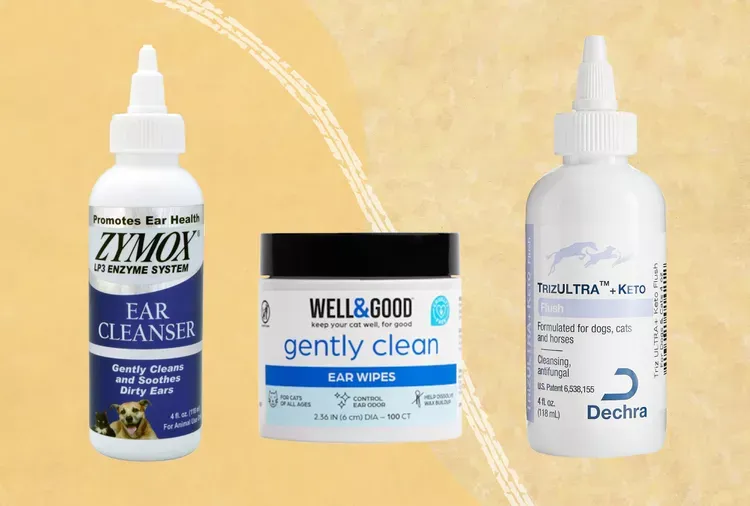
If your cat’s ears look grubby and you just want to know what to buy, here’s the short version: for everyday wax, get Virbac Epi-Otic Advanced. For a cat that keeps getting gunky, itchy ears, look at Zymox Otic. Everything else on this page is about picking between those, knowing when a cleaner is the wrong tool, and not making your cat’s ears worse.
That last part matters more than the product choice. Most healthy cats don’t need their ears cleaned at all, and the fastest way to cause an ear problem is to clean ears that were fine. So before you buy anything, look in the ear. Light brown, no smell, cat isn’t bothered? You can probably skip it. Black crumbly stuff, a bad smell, or a cat pawing at its head? Keep reading, because a cleaner alone won’t fix that.
I’ll say up front: I’m a cat owner who’s been through mite season, a yeasty ear after a bath that went wrong, and one cat who treats ear drops like a personal insult. None of the links below are paid placements. They’re Amazon search links (so you land on current listings rather than a dead product page), and yes, they carry our affiliate tag. Buy or don’t.
Quick answer: what I’d actually buy
- Best overall for routine wax: Virbac Epi-Otic Advanced. Neutral pH, no sting, the default vet-office cleaner.
- Best for infection-prone or chronic ears: Zymox Otic (with 1% hydrocortisone). Enzyme-based, no pre-cleaning, calms itch.
- Best wipes for quick outer-ear cleaning: Pet MD Aloe & Eucalyptus Ear Wipes. For the flap, not the canal.
- Best straightforward value cleaner: Vet Solutions Ear Cleansing Solution. Does the job, costs less than the name brands.
- Best drying cleaner for post-bath / water-prone ears: VetWELL Ear Cleaner. Has drying agents to wick moisture out.
Comparison at a glance
| Product | Type | Key active / approach | Alcohol-free | Best for | Size |
|---|---|---|---|---|---|
| Virbac Epi-Otic Advanced | Liquid cleaner | Glycotechnology, anti-adhesion | Yes | Routine wax, sensitive ears | 8 oz / 16 oz |
| Zymox Otic (+1% HC) | Enzymatic solution | LP3 enzyme + hydrocortisone | Yes | Chronic/itchy, infection-prone | 1.25 oz / 4 oz |
| Pet MD Ear Wipes | Wipes | Aloe, eucalyptus, cleansing | Yes | Outer flap, quick checks | ~100 wipes |
| Vet Solutions | Liquid cleaner | Gentle cleansing, deodorizing | Yes | Budget routine cleaning | 4 oz / 8 oz |
| VetWELL Ear Cleaner | Liquid cleaner | Cleansing + drying agents | Yes | Post-bath, damp ears | 8 oz |
A quick note on that table: “alcohol-free” is the column I’d actually check first on any cleaner you’re considering, for reasons I get into below.
The picks, in plain terms
Virbac Epi-Otic Advanced, Best Overall
This is the one most vets hand you, and it’s what I keep in the cabinet. It’s pH-neutral and genuinely non-stinging, which you notice the first time you use something harsher by mistake and your cat rockets off the counter. The “advanced glycotechnology” on the label isn’t just marketing fluff: the mono and oligosaccharides in it are meant to make it harder for bacteria and yeast to stick to the ear surface, which helps if your cat trends toward recurrent gunk. It lifts wax well, controls the faint musty smell healthy ears sometimes have, and it’s safe for cats of any age.
Downsides, honestly: it’s pricier than a generic bottle, and the liquid-in-the-ear routine is still a liquid-in-the-ear routine, so a cat who hates that will hate this too. It also won’t perform miracles on a canal packed solid with wax in one pass. You may need two sessions a day or two apart.
Key features: pH-neutral, no alcohol or peroxide, anti-adhesion glycotechnology, 8 oz and 16 oz bottles, cats and dogs of all ages.
Check Virbac Epi-Otic Advanced on Amazon
Zymox Otic, Best for Chronic and Infection-Prone Ears
Zymox works differently from a plain cleaner. It uses an enzyme system (the LP3 complex) rather than scrubbing, and the version with 1% hydrocortisone also takes the edge off inflammation and itch. The part people always get wrong: you don’t pre-clean before using it. You fill the ear and leave it, no wiping the enzymes out, because the wiping is what defeats the point. There’s a hydrocortisone-free version for maintenance once things calm down.
I reach for this on the cat whose ears flare up every few months. It’s not a substitute for a vet if there’s a real infection, and I want to be clear about that, but for low-grade recurring irritation and mild flare-ups it’s earned its spot. The hydrocortisone version does contain a mild steroid, so it’s not something to use daily forever without a vet in the loop.
Key features: enzymatic LP3 system, no-pre-clean protocol, hydrocortisone and non-medicated versions, good for recurrent/itchy ears.
Pet MD Aloe & Eucalyptus Ear Wipes, Best Wipes
Wipes are genuinely useful and often overlooked. These clean the ear flap (the pinna) and the folds you can actually see and reach with a finger. They’re pre-moistened, so there’s no squirting, no head-shaking, no wrestling. For a cat that’s only lightly waxy on the outer ear, or for a quick weekly once-over while you check for anything unusual, wipes are less of a fight than liquid.
The honest limit: a wipe cannot reach down into the ear canal, and you should not jam one in there trying. If the wax is deep, wipes won’t touch it and you need a liquid flush. Think of these as maintenance and inspection, not deep cleaning.
Key features: pre-moistened, aloe and eucalyptus, for the outer flap only, convenient for frequent checks.
Check Pet MD Ear Wipes on Amazon
Vet Solutions Ear Cleansing Solution, Best Value
If Epi-Otic feels expensive and your cat just needs a plain, reliable flush now and then, this is the sensible cheaper option. It cleans and deodorizes without alcohol, and it’s a common enough vet-office product that you’re not gambling on some unknown formula. It doesn’t have Epi-Otic’s anti-adhesion angle or Zymox’s enzymes, so it’s a simpler product, but for a cat with occasional normal wax that’s all you need.
Key features: gentle cleansing and deodorizing, alcohol-free, budget-friendly, 4 oz and 8 oz.
VetWELL Ear Cleaner, Best Drying Option
If your cat gets water in its ears (baths, or the rare cat that likes a sink), moisture left sitting in the canal is what yeast loves. A cleaner with drying agents helps wick that out. VetWELL cleans and includes those drying agents, which makes it a good after-bath choice specifically. For a bone-dry indoor cat you don’t need this feature, but for damp-ear situations it’s the right pick.
Key features: cleansing plus drying agents, alcohol-free, good for post-bath and moisture-prone ears.
Check VetWELL Ear Cleaner on Amazon
Ear cleaners vs ear wipes vs ear drops: which does what
People search for “cat ear cleaners and wipes” and “cat ear drops” as if they’re the same aisle. They overlap, but they solve different problems, and buying the wrong format is a common mistake.
Liquid cleaners (solutions and cleaning drops) flush the ear canal. You fill the canal, massage, and the loosened wax comes up and out. This is your real cleaning tool when there’s buildup you can’t see or reach. “Ear drops” on a cleaning product just means the same solution in a dropper bottle. Same job.
Ear wipes clean the outer flap and the visible folds. They can’t reach the canal and shouldn’t be pushed into it. They’re for maintenance, quick touch-ups, and looking things over. A cat that’s only mildly waxy on the outside may never need more than wipes.
Medicated ear drops are the ones that matter to get right. These contain an actual drug, an antibiotic, an antifungal, a steroid, or a mite killer, and they treat a diagnosed condition. A cleaning solution is not medicated. If your cat has an infection or mites, no amount of cleaner fixes it, and self-prescribing medicated drops off a shelf is how eardrums get hurt. Match the medicated drop to a real diagnosis from your vet.
What to look for in a cat ear cleaning solution
The single most useful buying skill here is reading the ingredient list and knowing what should not be in it. A good cat ear cleaner is:
- Neutral or balanced pH. Cat ear skin is delicate; the wrong pH irritates it.
- No-sting and non-irritating. If it burns, your cat learns to fight you, and cleaning gets impossible.
- Free of alcohol and peroxide. Both sting and can damage an already-inflamed or ulcerated canal.
- Fragrance-light. Heavy perfumes are a common irritant and do nothing useful.
Some cleaners add helpful extras: drying agents to pull moisture out after baths, or mild antibacterial/antifungal ingredients like ketoconazole, chlorhexidine, salicylic acid, or TrizEDTA for ears that keep getting infected. Those are worth having in a problem-prone cat, but they aren’t necessary for a normal cat with occasional wax.
Ingredients to avoid (this part is cat-specific)
This is the most important section. Keep these away from your cat’s ears:
- Rubbing alcohol / isopropyl alcohol. Stings badly and dries out and damages inflamed skin.
- Hydrogen peroxide. Foams and irritates, and can harm the eardrum. Not for ear canals.
- Apple cider vinegar. The internet loves it; an inflamed or ulcerated canal does not. It’s acidic and it burns.
- Essential oils, especially tea tree (melaleuca). Here’s the cat-specific catch: cats lack the liver enzyme glucuronyl transferase, which is what mammals use to process a lot of these compounds. That makes cats far more sensitive than dogs to essential oils, certain alcohols, and some preservatives. A “natural” ear remedy safe for a dog can genuinely poison a cat. Don’t assume a dog product is fine.
If a product’s label leans hard on “natural” without telling you what’s in it, put it down.
How to tell wax from mites from an infection
Before you clean anything, look at what’s actually in the ear, because it tells you whether a cleaner is even the right move.
- Normal earwax: light brown, a bit greasy, basically odorless. This is fine. Clean only if there’s a lot of it.
- Ear mites: dark brown to black, dry and crumbly, looks exactly like coffee grounds. That’s dried blood, wax, and mites together. Usually comes with a lot of head-shaking and scratching. If the debris looks like black coffee grounds, your cat likely has ear mites, not just wax, and you’ll want our guide to the best ear mite treatments for cats because a cleaner won’t kill them.
- Yeast or bacterial infection: lighter brown or yellowish discharge, often wet-looking, and it smells foul. The smell is the giveaway. This needs a vet, not a bottle of cleaner.
One thing that trips people up: mites and infection often show up together. Mites damage the ear and a secondary yeast infection moves in, so you can see both the coffee-ground debris and the foul yellow discharge at once. When in doubt, that’s a vet visit.
Safe at-home cat ear cleaning, step by step
If the ear is genuinely waxy (light brown, no bad smell, no pain) and you’re doing a routine clean at home, here’s how to do it without a fight or an injury:
- Warm the solution. Cold liquid in the ear makes any cat flinch. Stand the bottle in warm water for a minute so it’s roughly room temperature.
- Pick your moment. A sleepy, relaxed cat, ideally after a meal. Not right after you’ve upset it.
- Fill the canal. Lift the ear flap, put the bottle tip at the opening (not jammed in), and squeeze enough to fill the canal. It’ll look like a lot.
- Massage the base 20 to 30 seconds. Rub the base of the ear where it meets the head. You’ll hear a squishy sound, that’s the solution breaking up wax.
- Let your cat shake. Step back. The head-shake flings loosened debris up out of the canal, which is exactly what you want.
- Wipe, don’t dig. Use a cotton ball or gauze to wipe debris off the flap and the opening. Never push a cotton swab or Q-tip down into the canal. You’ll pack wax deeper or damage the eardrum.
- Treats. End on a good note so the next time is easier. I bribe shamelessly.
How often? For most cats, once or twice a month is the ceiling, and many need far less. Cats’ ears are largely self-cleaning. Over-cleaning does the opposite of what you want: it dries out the ear and can spark the very irritation you were trying to head off. Check often, clean rarely.
When to skip the cleaner and see a vet
A cleaner is for wax and hygiene. It is not for a sick ear. Get a vet’s eyes on it, don’t clean or medicate, if you see:
- Redness, swelling, or obvious pain when you touch the ear
- Pus, blood, or a foul odor
- Constant head-shaking or nonstop ear-scratching
- A head tilt, or any change in balance or hearing
And a hard rule: if there’s any chance the eardrum is ruptured, don’t put anything in the ear without vet guidance. Several cleaning solutions and most medicated drops can cause real harm if the eardrum is perforated. When you’re not sure, the vet visit is the cheap option compared to what a damaged ear costs to fix.
This article is general information from one cat owner’s experience and reputable sources like VCA Animal Hospitals, PetMD, and product manufacturers such as Virbac. It isn’t veterinary advice. Anything painful, smelly, bloody, or not improving needs your vet, who can actually look down the canal and diagnose what’s going on.
Related reading
- If the debris looks like black coffee grounds, that’s mites, not wax: best ear mite treatments for cats
- Pair ear care with a gentle wash-day routine: best cat shampoos
- Round out the grooming kit: best cat brushes
- For cats that hate being handled, gloves make ear checks easier: best cat brush gloves
- Support skin and immune health from the inside: best cat supplements
- If your cat panics the moment you reach for its head: natural cat stress remedies
- Reward cooperation so next time is easier: best cat treats